
What is your bottleneck?
Or, where do you actually need to be more "productive"?

Today’s post is brought to you by Cal Newport’s podcast. I am a longtime fan of his work, and his podcast is one of the only few I listen to with any regularity.
On this week’s episode he talked about something called “the bottleneck.” This is the aspect of your work where productivity gets slowed.
The general gist is this:
We think a tool will greatly improve our productivity.
We start using it.
But then it turns out the actual bottleneck for our work isn’t solved by the new tool at all.
The new tool simply streamlines some side things that, sure, are nice, but not transformative.
The bottleneck is where the real work happens, and the tool hasn’t touched that at all.
So our long-term productivity holds steady.
To quote Newport’s blog (where you can read more on this):
When working on Deep Work, for example, I spoke with a prominent Wharton professor who told me that one of the keys to publishing journal papers in his field was access to interesting data sets. He published more papers per year than most of his peers, largely because he spent more time building relationships with companies and institutions in search of good data. This was the bottleneck for his work.
Newport dives into this more on the podcast, so I highly recommend giving it a listen.
But the point is: no tool can help Wharton actually do the part where he has to talk to people and hope they’ll share their datasets. In the end, there’s only the difficult work of rolling up his sleeves, making phone calls, finding people, and doing that work directly.
So what’s the bottleneck?
You can no doubt guess where I’m going with this.
What is the bottleneck for writers?
Well, let’s assume the main thing we want as output is actual writing. Words on pages or books finished or sales made—that final productivity metric is up to you.
But no matter what, the starting point is always: words.
It’s always the act of putting your hands on a keyboard (or pen or mic or whatever!) and doing the difficult work of translating concepts and ideas into little symbols that convey something.
So then from there, if the bottleneck is the actual act of producing words, then the thing most of us need in order to write more words is pretty straightforward.
Admittedly, it will also vary person to person.
You might be someone who also needs chunks of uninterrupted time. Or you might be someone who needs a special combination of factors to get your brain into flow.1 Or you might be someone who needs their life to feel stable so you have the energy to give to your sentences…
All of that is perfectly valid!
But it doesn’t change the fact that at some point, you need to write words. And no one else can do that for you, nor can any software do it.2
There might be tools that help you write faster. (I love Scrivener! I love my reMarkable 2!) But they can’t actually do the difficult, bottleneck part of writing.
That’s why it’s a bottleneck: only YOU can do it.
Nurturing my bottleneck
As you all know from following me over the past few years, I’ve been downright merciless in my elimination of anything that I felt wasn’t “adding” to my career in a meaningful way.
(Note: my definition of “meaningful” might not be yours. We all have to define it for ourselves.)
But as you all also know, I didn’t cut back on social media, email, etc. with the aim of simply increasing productivity. Instead, I was faced with an absence of choice.
Life was not easy on the personal front; it wrecked my schedule; if I ever wanted to finish books again, I had to peel away the parts of my “job” that weren’t actually vital.
But now (knock on wood! Oh my gosh, KNOCK ON WOOD. DO NOT JINX ME, UNIVERSE), life has found a decent rhythm. In theory I could reintroduce my social media presence or all-day-inbox-checking or whatever else I used to think was so “vital” to my author career…
Yet I haven’t reintroduced any of those things.
Because the increased output of more books written is all the proof I need that what I once thought was vital, wasn’t vital at all.
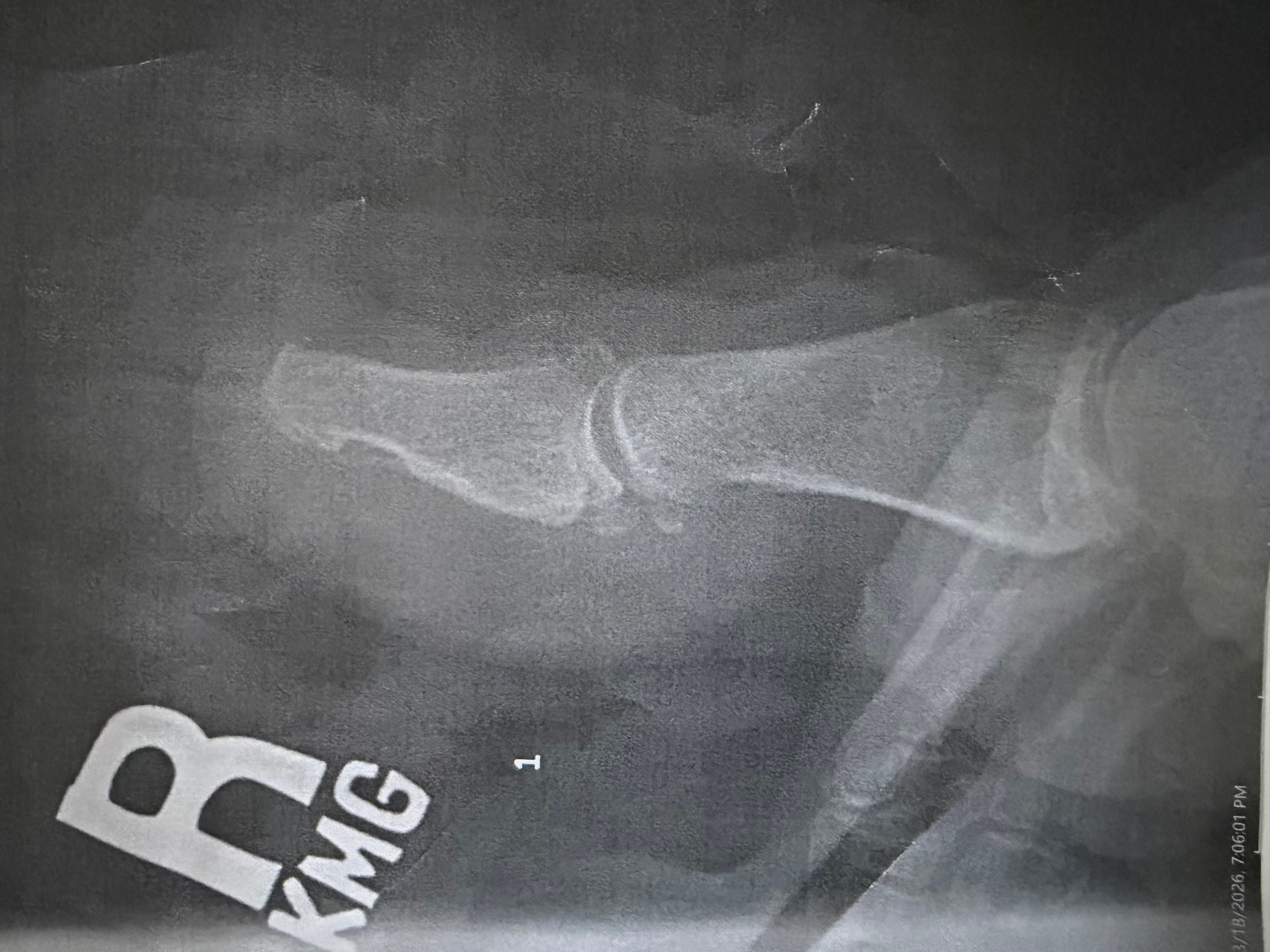
Okay, so fine. YES. I did fracture my big toe last Wednesday while teaching a children’s taekwondo class. See the above X-ray.
And no, I wasn’t doing anything cool. I just tripped like the graceful gazelle I am not. Then I ignored the pain for an hour and kept teaching.
Then I finally got a ride to Urgent Care because my toe was enormous and blue and excruciating. Whoopsy!
But this is just a little hiccup. Nothing like the nonstop trauma and vigilance we were going through for several years.
(Knock on wood. Again.)
Nurturing YOUR bottleneck
Every one of us is different.
How we write, how we create, how we fall into flow (or don’t), how we spend our free time and refill the well and search for inspiration and yadayadayada, Sooz.
I get it: I always preach this same message of our individual uniqueness. You’re probably sick of it by now.
But once again, it’s true.
I can’t say what YOU need in order to write more words. All I can do is focus on my own needs and try to accommodate them.
But I do urge you to look at the bottleneck and consider it AS a bottleneck. As the point at which words will get throttled if you don’t “keep it open.”
For me, ensuring I have uninterrupted “immersion” is the key to output. Existing all-in on a project so that all I want to do is sit at my computer and pour out words—that’s when I produce the most and I’m at my happiest.
I’ve found, by accident, how to create this “immersive life.” But what other ways might I enhance it? What tools—if any—could actually help me get there?
I don’t know.
But I do know, thanks to Newport, I’m going to consider that now every time I do look at a new tool or consider if I really should be on that new platform or…or…or…
You get the idea.
And I hope you all will ask the same questions for yourself moving forward.
Keep the bottleneck open, dear friends!
Okay, now back to the writing I go!
I was supposed to do the next M&D Primer Series today, but I just felt the urge to discuss bottlenecks instead. So stay tuned for more primers next week…
And now I’m going to return to my rewrite of Something Strange & Deadly because yes! I am finally tackling a rewrite of my debut series, refreshing it to match the voice I’ve spent the last 16 years honing. I cannot believe how much I have grown and changed as a writer since I sold that book in 2010!
Until next time, friends.
💚 - Sooz
I can write anywhere, on any surface or device, but I need a cup of coffee. Decaf is fine! I just need that hot drink and that coffee taste…
Fine. I guess LLMs can write words for you, but if you’re here, reading this, then I’m going to assume you are someone who wants YOUR words to be out there—not an algorithm’s. And you’re here because you are compelled to share what’s inside YOU. And because YOU have something to say that only YOU can actually say. Which brings me back to the main point: the bottleneck is the writing.
This post is so helpful! I recently realized my bottleneck is consistency: I tend to write when the muse strikes. I have long periods of being unproductive and quick bursts of writing SO much at once, but I actually think being more disciplined and writing regularly will be more helpful over time (especially when it comes to meeting deadlines).
I love this. My therapist recently told me to make my kids pitch in so that I could have some time back in the evenings after work. For three weeks, they have been cleaning the kitchen after dinner so that I can get right to the keyboard, and now I am totally immersed in my book again, and I feel great. I just needed to take the time to think about what adjustments could be made, and I needed the prompting from the therapist to do that. Thanks for sharing!